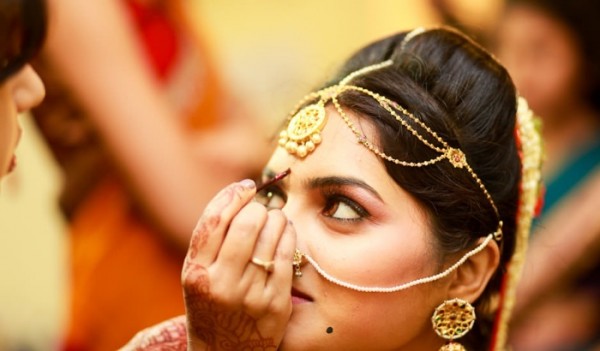
 South Indian wedding ceremony program
The Hindu Wedding Ceremony takes place in accordance with traditions described in the Vedas, The Hindu Scriptures. The holy mantras are recited in Sanskrit, the ancient language of India. The symbolic gestures throughout the ceremony complete the spiritual union of the Bride and Groom. The Wedding Pavilion where the ceremony takes place is called the Kalyana Mandapam.
Ganapathi (Ganesha) Puja
The groom offers prayers to Lord Ganesha, the remover of all obstacles, to ensure that the wedding ceremony takes place without impediments and for a blissful life. All auspicious ceremonies begin with invoking Lord Ganesha for good luck.
Punyaahavachanam (The Purification ceremony)
The waters from all holy rivers and oceans are invoked into a Kalasam; a pot decorated with sandalwood, turmeric, saffron and leaves with a coconut placed over it. The sprinkling of water from the Kalasam sanctifies the ceremony site and the items used in the ceremony.
Raksha Bandham
After invoking the blessings of Lord Ganesha, a sacred thread is tied around the groom’s wrists, to confer protection.
Vadhu Kalyanavedika Pravesam
The bride is escorted to the Kalyana Mandapam. Before she arrives, a screen symbolic of traditional barriers is held in front of the groom. The bride is seated on the opposite side of the screen.
Kanyaadaanam
The bride’s family offers her hand in marriage to the groom, after accepting a promise to treat her with love and as an equal partner in all walks of life. According to the Vedic scriptures, Kanyaadaanam is the noblest of all gifts. The groom makes his promise as holy water flows from the bride’s family’s hands to his own, symbolizing the transfer of responsibility from the family to the groom.
Lagnaashtakam
The priest proclaims the sanctity and importance of the marriage and seeks the blessings of the gods, the heavens and earth with eight Vedic mantras.
Sumuhurtham
This is the most auspicious time of the wedding and at the precise moment the bride and groom hold a paste made of cumin seeds and brown sugar on each other’s heads, signifying their spiritual union. The slightly bitter cumin and sweet jiggery when ground together turn into an inseparable mixture communicating that the bride and groom are supposed to become inseparable through life’s bitter and sweet times. The screen separating them until that point is removed in approval of the matrimony.
Madhuparka Samarpana
The parents present white wedding clothing to the bride and groom. At this point, they leave the Mandapam to change into the new garments presented by their respective in-laws.
Mangalya Dharanam
The groom ties a Mangala Sutra, a sacred thread, around the bride’s neck with three knots, representing love, affection and companionship. This is a significant moment in the ceremony because the Mangala Sutra symbolized the eternal bond of marriage, and a long protected life for the bride and groom.
Paanigrahanam
The couple hold hands and take their vows in the presence of God and all assembled. They exchange garlands and rings.
Akshataaropanam (Talambralu)
The bride and groom shower each other with turmeric covered rice mixed with pearls, corals and flowers. This traditional Telegu practice is meant to bring the couple together with mutual offerings of faith and hope for love and prosperity in their life together.
Mettilu Pillelu
The bride is given toe rings as a symbol of her being married.
Brahmamudi
The priest ties the ends of the bride and groom’s garments in a matrimonial knot symbolizing the entwining of their lives and union of their souls. They remain tied together for the remainder of the ceremony.
Saptapadi
The bride and groom hold hands and take seven steps together, making seven marital vows.
The first step is to share responsibility of the household;
The second step is to give each other strength and grow together in strength;
The third step is to acquire prosperity and respect of both peers and elders;
The fourth step is to share each other’s joys and sorrows;
The fifth step is to care for their children;
The sixth step is to remain together forever;
The seventh step is to remain lifelong friends in harmony.
After the seventh step, they say to each other, “with seven steps we become friends. Let me not be severed from your friendship. Let your friendship not be severed from me.” At the end of this step they become husband and wife.
Mangala Haarathi
Family members bring a sacred light seeking eternal peace and happiness. This step signifies the completion of the marriage ceremony.
Nakshatradarshanam
The priest takes the bride and groom outside to point out the seven stars in the sky, asking for the blessings of the seven Rishis and Arundhati.
Thank you for visiting our Indian wedding blog! See you tomorrow for Shoesday Tuesday!